It’s hard for me to set this journey to music. Usually, movement evokes an immediate sound in my mind, yet after days in this country, I still can’t hear it clearly. At first I gravitate toward the pentatonic scale, but it sounds clichéd—this country is not the East of my subconscious. From the airplane I glimpse hundreds of kilometers of inhospitable land; I’ve never seen such vast expanses without humans. I spent so many nights of my childhood awake playing Age of Empires, choosing the Mongols over and over again to build my empire. I could never have predicted that I would one day be walking this path, stirring, body and flesh in one of the last virgin steppe ecosystems of this planet.
Capital Ulaanbaatar is a dreadful city marked by a deep disconnection between the urban and its natural context. At least this is my first impression, it seems a result of rushed development without any kind of regulation. It reminds me of Nairobi, Maputo, or Poblacion in Manila, places like labyrinths of incomprehensible logic. On the outskirts, there are remnants of Soviet influence in dilapidated block housing. These buildings starkly contrast with the glass and metal towers that flood the center like an infection. The traffic is considered by many to be the worst in the world, and maybe rightly so: it took me four and a half hours to cover the 40 km from the airport to the city center.
I arrive with the days of Naadam, a surreal journey into ancient Mongol culture. The entire country halts for these games, which begin with the procession of nine white horsehair banners from the Parliament Palace to the stadium for the opening ceremony, a display of riders, dancers, archers, and other bearers of their most ancestral traditions. We are not participants; we are spectators. It’s clear it belongs to the locals and only the locals can be part of it, but we can watch and it’s fascinating. I stand in the stadium amazed yet I don't feel like an intruder. The colors are explosive. The music is solemn, almost military, defined by brass winds and their two-stringed horsehead fiddles. The sound moves me, but I cannot claim it, there is a sharp sense of privilege around it. This is how their fantasy sounds, though it’s not how I hear it.
I leave behind the city’s intense rumble in search of the land’s heart. Our driver, Tögöldör (Төгөлдөр), sings in Mongolian to stay awake on the boundless roads; songs about their lands and its lakes, which are as scarce as water in general in this continental country surrounded by mountains that block moist clouds. I have read so much about this place that I feel a film unfolding before my eyes as I move forward into the vastness of the steppe.
The roads are barely marked, splitting into dozens of paths across the grasslands stretching infinitely, unbroken by trees. Like the garden of forking paths, I joke. The landscape is both soothing and desolate, and I think of some Ravel. A piano sonatina slowly arises. I plug in my headphones and feel it sliding across this abyssal, eternal landscape. No—Ravel is too far away.
With the Mongols, I share a timeless fascination with Genghis Khan. He is everywhere; it makes sense. He was the man who united the Mongol tribes and built the greatest, most powerful empire the Earth has known. I always picture this man alongside horses running wild across the prairies, I didn’t know why until now. This sacred animal is central to nomadic life, living in perfect harmony with the Mongols, who decorate their saddles with symbols like the swastika, lotus flowers, or dharma wheels to protect and bring good fortune. The landscape bestows upon me herds of horses running down the mountains through green fields and across rivers, they evoke so many movie scenes of my childhood, I lose all sense of where I am.
We eat yak, goat and lamb meat constantly, every day, with cheeses of complex flavors and scarce vegetables. At night we drink vodka, in the morning fermented mare’s milk, and tea throughout the day. We offer a bit of each to the four winds in gratitude. Mongolia has been a Buddhist nation for over five hundred years, despite the horrific massacre of monks carried out by Stalin in the 1930s. I visit temples deep in the mountains in my search for a theme but I hear only the wind—meditation is the sound of nothingness.
The countryside dwellings are simple yurts with no windows, carpeted and with walls decorated with saddlebags and sometimes an image or a painting. An opening at the top lets in the light and releases the smoke produced by a central stove. The space is arranged in a circle: the women’s side is to the right of the door, for cooking and chores; the men’s, for rest, to the left. Women work inside, men outside. I visit a couple and their four children. He looks about 65 but is barely 40, his skin toughened by sun and wind, a common sight in a country where life expectancy hovers around 60 due to a monotonous, meat- and fat-heavy diet. The shy girls smile and offer me a small fried pastry and pungent mare’s milk. I accept, though I’d rather not; in Mongolia it’s deeply rude to refuse an offer. For all its novelty, life arranges itself much as it does for us: beds to sleep in, meals with family, dishes to wash, and songs to entertain.
One day, on a long journey, I encounter a beautiful young Mongolian near a sacred stone. We gaze at each other for a long time, he shows a gritty innocence. I tend to look away out of shame, he nevertheless holds the gaze, unfazed, with a slight smile. I approach and ask his name in Mongolian—one of the few phrases I’ve learned. I can’t repeat what he says but his voice is so soft, his presence so deep. Before I leave, I take him a photo and show it to him—there’s a sparkle in his eyes from our encounter. We share a silence, and I think to myself that we are not so different after all.
I arrive at the Gobi Desert after a ten-hour journey where the green rolling steppe gives way to a dry, rocky plain, streaked with reddish mountain ranges. It reminds me of La Rioja in Argentina—a plateau overlooking an infinite flatland, with no yurts in sight. Again, the vertigo of the incognoscible. Sometimes I think God used copy and paste when creating the world, always finding familiar places in exotic lands. Here, a hundred years ago, the first dinosaur egg was discovered, during an expedition led by American explorer Roy Chapman Andrews—the inspiration for Indiana Jones. I think, amusingly, of John Williams. But his music feels like a comedy and doesn’t fit. I’ll keep searching.
I realize how limited my knowledge of Eastern music is. Beyond some pentatonic motifs, I ignore the depth of these local sounds. I always joke that I know about everything, but it’s not true. I’m just too curious. I collect facts, I can talk about anything—but though real knowledge is something else, only a few ever notice. In any case, I do believe that knowledge is acquired in a time shaped by the chance encounters of books and travels. The only rhythm coursing through me now is the fatal rattling of the Russian truck making its way through the sea of rocks and sand. My spine is begging for rest. This country is a journey of becoming, more than a spectacle—reflections from other worlds in order to return to your inner self, as always. I’m becoming more aware of that.
I’ve been riding in this Russian truck for days and suddenly it strikes me. Russia is just around the corner. My mind drifts back to the desert, to the image of the dry sea receding as the Bombardier lifts me into the air on my flight back to the capital. I think of the camels’ gait. I don’t know why, but I begin to hear a distant sound, one of my favorite piano concerti. It feels like this concerto was written for this land, it carries the complexity and grandeur of the landscapes that surround me. My favorite composer, Prokofiev. He is not far. Not even Borodin. Just the magnificent Prokofiev.
I return to Ulaanbaatar hoping to rest. The opposite happens. I find an urban rhythm I particularly enjoy. The contrast with the desert is fascinating. There’s humidity in the air, the city looks particularly beautiful—I don’t understand what has changed. Maybe it’s just that I know these streets now, or perhaps I am thrilled by new connections. I have no obligations. I walk aimlessly while hundreds of little motorbikes swerve dangerously around me. I connect with locals using the phrases I’ve learned, I feel like Alice with the mad hatter, negotiating jokes while I take the streets, everyone smiles at me. I run back to the hotel, soaking wet under heavy rain, while I listen to Concerto No. 3—the sound of Mongolia, my sound of Mongolia—Martha Argerich’s fingers tracing the stone cliffs that embraced me days ago. I don’t know why, this time I don’t want to leave, my body asks me to stay, I don’t want this feeling to end. How can I keep it, I wonder, as I settle into a windowless seat 18A on flight CA724 out of the country. One day, I’ll return. Until then, I’ll have Martha’s Prokofiev to come back whenever I need.
Thursday, December 18, 2025


Wednesday, March 13, 2019
Give it some time to contemplate
Time will never be enough.
A not-so-pleasant start, but also the premise that leads me to write after so long. I resigned myself to the fact that time will never be enough again. Never. I can't get rid of that feeling... there will never be enough time to do it all! To experience it all. Or to see it all, since during the last few years doing things has become actually seeing things.
But what is actually seeing it all? Every corner? From every angle? Every possible point of view at every second of the day? Even if I were immortal, there wouldn't be enough time to conceptually see it all. And, if possible, how would it actually be? I can't help thinking about The Aleph, that amazing point in the universe described by Borges, a point that contains all other points, a point where you can see everything in the universe from every angle simultaneously, without distortion, overlapping, or confusion. Seeing it all would be, without a doubt, devastatingly overwhelming.
I can see today a disproportion between what is exhibited and the time that is available for contemplating it. Any city can be a good place to experience that feeling, but you can also think about any museum, or take just a single painting. This disproportion —which characterizes most of the contemporary exhibitions— has been overly intensified by social networks, where the availability of information and pictures have become virtually infinite. The quickness of the Calvino's Memos for the Next Millennium has been utterly misunderstood (looks like we have speed but we have no actual motion).
Some short stories by Felisberto Hernández were already at the beginning of the last century starting to focus on the changes of the rising consumer society, particularly on a sensory and perceptual level. In 1887, Nietzche had already spoken about an abundance of impressions in the material conditions of the cosmopolitan urban modernity. An overabundance that, like in Felisberto's stories, seemed to be not only difficult, but rather impossible to digest. The result of this distressing hyper stimulation is that: "one instinctively resists taking in anything, taking anything deeply, to "digest" anything". Contemplation turns into 'mere impressions'.
Why can't we slow down the speed and think of those situations that force us to gaze at one thing, just due to the impossibility of of moving towards volatile vertigo? I came across this thought on my fourteen-hour plane journey from Frankfurt to Buenos Aires last night, when I found myself staring in rapture at the dilatory passage of the sky under my feet through the window of the aircraft, while flying over the Sahara Dessert. The remaining flight hours created that "no vertigo" situation. Maybe the loss of one's own time control? —this does not happen to me on the bus because I can drop off at any time, or check my social media accounts—. An aesthetic experience moment, a larghissimo time, as opposed to the prestissimo that Nietzche mentioned in The Will to Power. A temporary dilation that revealed not the thing itself, but the moment in which the thing was happening, and therefore the subjective sensorial experience of that same thing. The founding principle of the spectacular (the assumption that something must happen before our eyes) got exterminated in that very moment: fabulous.


Intellectual elites, however, are rewarding the time of contemplation. For example, I think about Cuaron's latest film, Roma. A film in which the time of contemplation plays a major role, a film which has won many prizes including the Golden Globes, BAFTAs and Oscars, and has several nominations for further recognitions. There is, again, a bourgeois split between cultured time and street time. The cultured time can be bought inside a movie theater with Campari orange.
And what is it about photography, which helps us multiply the joyful experiences in our memory? Is digital photography nowadays an unfortunate attempt to extend the time contemplating about a thing? A faint awareness of our lack of time, or at least, a weak certainty that contemplation may extend over time, even if the thing is gone. Photography has always been a reminder of the transitory nature of time, a record of unrepeatable moments that allows us to thieve that thing that will no longer be there, never again, a representation of an absence, of a pycnolesia.
But when I meditate about the reason why I take pictures with my phone, I can't help thinking of two scenarios: on one hand, I take pictures in order to represent something that turns into a past in the very moment of the capture —basically, a memory—. On the other hand (and this freaks me out), I am starting to feel that I take pictures just to give entity to the moment, a present being that is constructed as a digital present... as if I didn't take the picture, the moment simply wouldn't exist. The time is built by the picture, the reality criteria now lies on the digital picture... has social media shaped my mind so much?
And I also think that this reflection could actually be just a bit of nonconformism... just the necessary amount to be inspiring enough in a consumer world, the necessary amount just to produce a feeling of freedom, an illusive capability of being oneself. I wonder now if this whole contemplating time thing is just another form of late capitalism. The worst part is that I don't think I have the time to elucidate it.
But when I meditate about the reason why I take pictures with my phone, I can't help thinking of two scenarios: on one hand, I take pictures in order to represent something that turns into a past in the very moment of the capture —basically, a memory—. On the other hand (and this freaks me out), I am starting to feel that I take pictures just to give entity to the moment, a present being that is constructed as a digital present... as if I didn't take the picture, the moment simply wouldn't exist. The time is built by the picture, the reality criteria now lies on the digital picture... has social media shaped my mind so much?
And I also think that this reflection could actually be just a bit of nonconformism... just the necessary amount to be inspiring enough in a consumer world, the necessary amount just to produce a feeling of freedom, an illusive capability of being oneself. I wonder now if this whole contemplating time thing is just another form of late capitalism. The worst part is that I don't think I have the time to elucidate it.
Sunday, August 21, 2016
Paint over your used canvas
If it is by nature, because of divine purposes or just another unwished consequence of capitalism, I actually don't know, but we humans are accumulators par excellence. We are surrounded by the culture of 'retain'. Digitally programmed to save it all. Even understanding the pointlessness of preserving a whole arsenal of useless things, we tend to think we might need some of it later on, and we keep them all. There is something awfully unhealthy in the fact that we need to retain everything we touch. As if having filled drawers and overflowing files could, ultimately, save us.
OK.
There is an explicit call to the idea of the transitory impermanence of life, something that as a rule, we humans avoid dealing with. It is to be found a strong relationship between the human being and the passage of time in the fleeting integrity of the structural components of those works of art. This is it, and it is now: later, probably it won't be anymore, and that's the whole point.
Figuring up our life stages as paintworks: we need to start painting over our used canvas! There is an urgent appeal to jettison the cursed habit of saving them all. It sounds so tough, after so much effort, thinking of letting our work go. And yes, I know, it has never been easy to experience, deeply, the devastating dispensability of being. But actually there is no need to throw them away. We just have to start over again, reuse them, paint over them.

Every brushstroke incorporates all the ones I made before. I mean: everything that I was and could not be brought me to this present place. The actual painting takes in everything that makes me be what I am. The actual painting includes somehow all the previous ones. It applies to relations, studies, decisions, failures: how many times we have changed course does not matter but for the purposes of what we are in the exact moment of now. Working on an only canvas allows us to step back and ask ourselves why. It helps us focus, clear out. Staying away from the damn habit of trying to understand it all. It helps especially to let go.
OK.
I've been lately taking special notice of a whole unpriced concept of art: the ephemeral art. Snow, ice and sand sculptures, body art, fireworks, gardening, magic fountains, graffiti, are all examples of artistic expressions that are not meant to last. Not that it is a groundbreaking brand new thing we have never heard of before, just think yourself as a child. I was used to build sand forts, and I should admit I still enjoy spending hours of patience and endurance to create useless sand barriers which will vainly fight against the fierce waves. Tons of hours spent that go down the drain. So what?'Ephemeron, from the Greek, means something that last no more than a day (epi: on, for, hemera: day)'.
There is an explicit call to the idea of the transitory impermanence of life, something that as a rule, we humans avoid dealing with. It is to be found a strong relationship between the human being and the passage of time in the fleeting integrity of the structural components of those works of art. This is it, and it is now: later, probably it won't be anymore, and that's the whole point.
Figuring up our life stages as paintworks: we need to start painting over our used canvas! There is an urgent appeal to jettison the cursed habit of saving them all. It sounds so tough, after so much effort, thinking of letting our work go. And yes, I know, it has never been easy to experience, deeply, the devastating dispensability of being. But actually there is no need to throw them away. We just have to start over again, reuse them, paint over them.

Every brushstroke incorporates all the ones I made before. I mean: everything that I was and could not be brought me to this present place. The actual painting takes in everything that makes me be what I am. The actual painting includes somehow all the previous ones. It applies to relations, studies, decisions, failures: how many times we have changed course does not matter but for the purposes of what we are in the exact moment of now. Working on an only canvas allows us to step back and ask ourselves why. It helps us focus, clear out. Staying away from the damn habit of trying to understand it all. It helps especially to let go.
Social media as Snapchat or the recent update of Instagram moves in that direction, offering the chance to create a self-destroying message, placing first its content over its relevance in time. It makes me kind of comfortable and confident about the way the world is moving on now. It's time to stop feeding our fragile memories with poisonous chat histories and souvenirs' trunks, epic collections, which ironically stagnates us in a nostalgic whirlwind, no exit, no forward. Memories are an inevitable part of our lives, they bring almost bodily sensations (sometimes with uncanny acuteness) but come on, nothing can substitute a real experience, at no time. It avails me nothing to remember if I can't feel your skin in the end. Therefore no more brand new canvasses to buy, just the old and used ones to bring back. Provided, of course, we never run out of color and paint supplies.
Thursday, August 4, 2016
The two brains
There are two brains.
There is one that we well know, inside the head, it thinks and reasons, analyzes, develops. It also imagines, magnifies, ennobles. Exposes. Spins, complicates, clarifies. Tells. All that, the brain in our head can do, and more.
However there is another brain we might miss. It is located in the chest. With another type of neurons. It feels. Some people call it heart.
There is something about the way our brain works that freaks me out. Sometimes it's just too hard to understand. The more I think about something, the further the matter darkens, the quicker the clarity vanishes, the more confused I feel. There are times in our lives, times of mental chaos. In those moments, urgent things normally impose over important ones. The threshold of endless arguments. We mistake a part for the whole. There is a beautiful saying in spanish that prays: don't let the tree prevents you from seeing the forest. Too many 'musts'. Too many contradictions. How to find peace in the midst of so much mess: the point.
When chaos reigns, it's time to pay attention to the other brain. The one located in the chest. It cannot think, analyze or explain. It can just say no or yes. But it should be enough, right? Listen to the second brain.

There is one that we well know, inside the head, it thinks and reasons, analyzes, develops. It also imagines, magnifies, ennobles. Exposes. Spins, complicates, clarifies. Tells. All that, the brain in our head can do, and more.
However there is another brain we might miss. It is located in the chest. With another type of neurons. It feels. Some people call it heart.
There is something about the way our brain works that freaks me out. Sometimes it's just too hard to understand. The more I think about something, the further the matter darkens, the quicker the clarity vanishes, the more confused I feel. There are times in our lives, times of mental chaos. In those moments, urgent things normally impose over important ones. The threshold of endless arguments. We mistake a part for the whole. There is a beautiful saying in spanish that prays: don't let the tree prevents you from seeing the forest. Too many 'musts'. Too many contradictions. How to find peace in the midst of so much mess: the point.
When chaos reigns, it's time to pay attention to the other brain. The one located in the chest. It cannot think, analyze or explain. It can just say no or yes. But it should be enough, right? Listen to the second brain.

Friday, May 6, 2016
On transcending polarity
It is inevitable to polarize. From time immemorial, we have had the need to polarize and construct dualistic views of the world, perhaps as a human response in seeking to understand this complex environment in which we are placed. Just think about creation myths and religious stories—to quote an ancient example, but there are plenty—: they already showed these pairs of opposition: creator and created, light and shadow, day and night, sin and salvation. We still talk in terms of binarity as we continue to oppose objects and concepts to understand them: the sun and the moon, the city and the countryside, the left and the right. Even digital technologies are entirely based on two terms: ones and zeros. Over an above, human Modernity has done nothing but enhance this particular conception, mixing it with the idealization of order and progress and a cultural system that supports —and guarantees— this division.
Whether this binarization is fundamentally a structural issue of the world itself or whether it is a developed behavior of the human psyche is irrelevant to me. There is something clear: uncertainty generates anxiety, it is distressing, anguishing. Standing in front of the abstract, of the obtuse, of the vast, the inability to classify, it makes us blind, crazy, it stagnates us. We are not trained to enjoy this particular struggle between opposing forces. We humans have known, since archaic times, how to take advantage of the reduction of events' complexity to just a pair of alternatives and have turned it into a survival mechanism, which is particularly awesome. However, it looks like we are getting too accustomed to this simplification.
Grays —as the midpoints between black and white— mean complexity, the indeterminate, the incompleteness. Also, for the western culture that shapes us, grays translate directly into anguish due to the impossibility to choose between two differentiated elements, in this case black and white. The modern apparatus keep on making us think in terms of binarity. This symmetry has become even a quantum principle that now also runs our physics; just think about the latest scientific discoveries on matter and antimatter. A re-interpretation of Dante’s work The Divine Comedy actually mentions that "the darkest places in hell are reserved for those who are neutral in times of moral crisis". Why all this propaganda against the slightest idea of complexity?
Although duality works effectively when it comes to solving rational issues, it presents serious problems with regard to irrational affairs, often deeper and more relevant to our existence. The lack of polarity hence requires a higher critical analysis of what we know, see and experience, which does not sound particularly appealing to the world power system. Binarization continues to exert an obsolete hold on us if it stops us from looking beyond this duality of black and white, or good and bad. That's why it urges the need to transcend polarity.

There are probably other ways but this is what has worked for me so far —and I am sorry I always talk about my life, but the fact is I haven't lived another one—. If we assume that our understanding of the world depends on its deconstruction in pairs of opposition, then it is logical to choose one of two alternatives. Save that in order to transcend this polarity, I deeply believe it's necessary to explore both alternatives, and furthermore, carry to the extreme of them. There is somewhat controversial with the extremes and also a lot of modern propaganda against its implications. But I personally think that going to the extreme of possibilities is actually the best way to perceive the whole. It demands a high degree of commitment, a release of the organicity, an opening to the risk of exposing oneself to the self-awareness of being. The journey may become even magic when we find the opposites in total syncretism —the order in disorder, for example— and the whole conception of dualism starts to weaken: the two mutually exclusive alternatives show up together?
Openness to radical change is not seen as an alternative anymore, but as a consequence in the search of transcending polarity. Of course it's clear we have to think about what we're willing to lose, to let go, but not necessarily overthink. After all, there is no thing such as pure state of the subject, moreover, if something is actually true, it is the capacity of the subject to be affected by everything. We are so social, so created by the coercive apparatus, so assembled, that we find it almost impossible to think about a range of possibilities that breaks away from what we and society expect from us. These limits are closely related to the polarization model that runs our critical thinking.
If we are able to spot this slight deviation, this shift, this variation in our natural organicity, it probably means that somewhere there is a positive perturbation: time to take advantage of it, time to start exploring. Polarization is essential, as long as we do not just simply choose one of the poles but transcend carrying both alternatives to the extreme in order to lead the emergence of a new wider and more complex understanding of the whole thing in question, and also of oneself, of course. The era of continuous change is paying off, especially in this quest to transcend polarity. But the willingness to make it happen is still the determining factor.
Whether this binarization is fundamentally a structural issue of the world itself or whether it is a developed behavior of the human psyche is irrelevant to me. There is something clear: uncertainty generates anxiety, it is distressing, anguishing. Standing in front of the abstract, of the obtuse, of the vast, the inability to classify, it makes us blind, crazy, it stagnates us. We are not trained to enjoy this particular struggle between opposing forces. We humans have known, since archaic times, how to take advantage of the reduction of events' complexity to just a pair of alternatives and have turned it into a survival mechanism, which is particularly awesome. However, it looks like we are getting too accustomed to this simplification.
Grays —as the midpoints between black and white— mean complexity, the indeterminate, the incompleteness. Also, for the western culture that shapes us, grays translate directly into anguish due to the impossibility to choose between two differentiated elements, in this case black and white. The modern apparatus keep on making us think in terms of binarity. This symmetry has become even a quantum principle that now also runs our physics; just think about the latest scientific discoveries on matter and antimatter. A re-interpretation of Dante’s work The Divine Comedy actually mentions that "the darkest places in hell are reserved for those who are neutral in times of moral crisis". Why all this propaganda against the slightest idea of complexity?
Although duality works effectively when it comes to solving rational issues, it presents serious problems with regard to irrational affairs, often deeper and more relevant to our existence. The lack of polarity hence requires a higher critical analysis of what we know, see and experience, which does not sound particularly appealing to the world power system. Binarization continues to exert an obsolete hold on us if it stops us from looking beyond this duality of black and white, or good and bad. That's why it urges the need to transcend polarity.

There are probably other ways but this is what has worked for me so far —and I am sorry I always talk about my life, but the fact is I haven't lived another one—. If we assume that our understanding of the world depends on its deconstruction in pairs of opposition, then it is logical to choose one of two alternatives. Save that in order to transcend this polarity, I deeply believe it's necessary to explore both alternatives, and furthermore, carry to the extreme of them. There is somewhat controversial with the extremes and also a lot of modern propaganda against its implications. But I personally think that going to the extreme of possibilities is actually the best way to perceive the whole. It demands a high degree of commitment, a release of the organicity, an opening to the risk of exposing oneself to the self-awareness of being. The journey may become even magic when we find the opposites in total syncretism —the order in disorder, for example— and the whole conception of dualism starts to weaken: the two mutually exclusive alternatives show up together?
Openness to radical change is not seen as an alternative anymore, but as a consequence in the search of transcending polarity. Of course it's clear we have to think about what we're willing to lose, to let go, but not necessarily overthink. After all, there is no thing such as pure state of the subject, moreover, if something is actually true, it is the capacity of the subject to be affected by everything. We are so social, so created by the coercive apparatus, so assembled, that we find it almost impossible to think about a range of possibilities that breaks away from what we and society expect from us. These limits are closely related to the polarization model that runs our critical thinking.
If we are able to spot this slight deviation, this shift, this variation in our natural organicity, it probably means that somewhere there is a positive perturbation: time to take advantage of it, time to start exploring. Polarization is essential, as long as we do not just simply choose one of the poles but transcend carrying both alternatives to the extreme in order to lead the emergence of a new wider and more complex understanding of the whole thing in question, and also of oneself, of course. The era of continuous change is paying off, especially in this quest to transcend polarity. But the willingness to make it happen is still the determining factor.
Thursday, January 14, 2016
When the road disappears
More than two years have passed since my last entry. I have recently found myself reading some of my old posts, and for some moments I couldn't help feeling that they were written by other person than me. Time is nothing but distance, and now, when I read those entries, it becomes clear to me how far we can travel from our old selves as time goes by, even being in the same physical location.
Fortunately I started this year travelling, and after being devoured by the most imposing corners of Patagonia, I wanted to share what I felt down there, which I believe is in tune with the beginning of a very special year for most of the people that surround me.
I would dare to say that more than light beings, humans are movement beings (which would be pretty much the same anyway). There is something about the way we move and what leads us to move, and I'd like to call it here 'the road', just to be clear in the metaphor. So, there is this certainty under our feet, the road we follow, with different intensities, more or less passionate, more or less confident, but still there: the road. If there is a road, therefore there is a goal, there is a destination, projects, ambitions, just movement, and when we move, we often have a kind of marked road underneath us. But recently, I have come across the thought that sometimes we put so much attention on the road, that it makes us unable to see where are we actually heading to.
But beyond that, the big thing comes when the road forks, or even worse, when it disappears. How difficult it is to keep us as movement beings when we can't descry the road! On a small scale, I felt this uncertainty when the trail vanished in the middle of a forest day-trekking in Fireland. There we were, standing still at the end of the road, at the beginning of the real world, looking forward but unable to move even a toe. Of course it took us not long to start walking our own path, avoiding swamps and passing through tunnels of fallen trees. What happened: we had to switch our source of confidence, what takes time, of course, and the bigger the scale, the more time it takes to unblock the fears and get back into the ring.
 On the flight back home, it was extremely cloudy and I thought of the pilots, trying to catch sight of any hint that could locate them in the space. The cabin has to turn very very mystical when the plane is shrouded in clouds so thick that impede any vision. Even for them, the road disappears. The have to switch their sources of confidence: they can't trust their senses any longer, since those become fuzzy and confusing, but still they have other ways to feel that they are on the right path. There is no fear.
When the road disappears, one feels itself small. Roads make world look smaller, certainty makes world look smaller. As soon as the path vanishes and darkens, we feel tiny, minimum, fragile, but part of a huge expanding universe though. It puts us in a place where our boundaries, in communion with the outside, are effaced, and we cannot do anything but cultivate ourselves and grow. And once we dispel all our fears, we are able to move again. That absence of fear is the closest thing to God I've experienced in recent years, and in the Andes, in the middle of nowhere, it becomes stronger and emotional.
This year comes to me as a year of uncertainty. A kind of tabula rasa, empty. Far away from all the previous ones. I feel that what is certain today can change dramatically tomorrow. Everything changes, but actually. The evidence is everywhere. I've visited yesterday La Menesunda, a 1965 mythic work of the Argentine art’s history by Marta Minujin, which has been recreated at the Museum of Modern Art in Buenos Aires. Anyone in Buenos Aires should visit it, mainly to feel this discomfort of the sudden, of the surprise, but also to realize how comfortable it becomes the uncertainty, so postmodern, so hedonist. This year appears as a year of uncertainty: which means, I need to switch my source of confidence. That's why, when I look back in time, those old entries on my blog strikes me as being remote and distant. There was a road, and now it's disappeared.
Fortunately I started this year travelling, and after being devoured by the most imposing corners of Patagonia, I wanted to share what I felt down there, which I believe is in tune with the beginning of a very special year for most of the people that surround me.
I would dare to say that more than light beings, humans are movement beings (which would be pretty much the same anyway). There is something about the way we move and what leads us to move, and I'd like to call it here 'the road', just to be clear in the metaphor. So, there is this certainty under our feet, the road we follow, with different intensities, more or less passionate, more or less confident, but still there: the road. If there is a road, therefore there is a goal, there is a destination, projects, ambitions, just movement, and when we move, we often have a kind of marked road underneath us. But recently, I have come across the thought that sometimes we put so much attention on the road, that it makes us unable to see where are we actually heading to.
But beyond that, the big thing comes when the road forks, or even worse, when it disappears. How difficult it is to keep us as movement beings when we can't descry the road! On a small scale, I felt this uncertainty when the trail vanished in the middle of a forest day-trekking in Fireland. There we were, standing still at the end of the road, at the beginning of the real world, looking forward but unable to move even a toe. Of course it took us not long to start walking our own path, avoiding swamps and passing through tunnels of fallen trees. What happened: we had to switch our source of confidence, what takes time, of course, and the bigger the scale, the more time it takes to unblock the fears and get back into the ring.

When the road disappears, one feels itself small. Roads make world look smaller, certainty makes world look smaller. As soon as the path vanishes and darkens, we feel tiny, minimum, fragile, but part of a huge expanding universe though. It puts us in a place where our boundaries, in communion with the outside, are effaced, and we cannot do anything but cultivate ourselves and grow. And once we dispel all our fears, we are able to move again. That absence of fear is the closest thing to God I've experienced in recent years, and in the Andes, in the middle of nowhere, it becomes stronger and emotional.
This year comes to me as a year of uncertainty. A kind of tabula rasa, empty. Far away from all the previous ones. I feel that what is certain today can change dramatically tomorrow. Everything changes, but actually. The evidence is everywhere. I've visited yesterday La Menesunda, a 1965 mythic work of the Argentine art’s history by Marta Minujin, which has been recreated at the Museum of Modern Art in Buenos Aires. Anyone in Buenos Aires should visit it, mainly to feel this discomfort of the sudden, of the surprise, but also to realize how comfortable it becomes the uncertainty, so postmodern, so hedonist. This year appears as a year of uncertainty: which means, I need to switch my source of confidence. That's why, when I look back in time, those old entries on my blog strikes me as being remote and distant. There was a road, and now it's disappeared.
Tuesday, October 22, 2013
Start over again
 I have forgotten where or when it was that I first met the structure of a wave. Probably I did not think about the similarity between them and life. But now, this is interesting.
Waves are everywhere. They are oscillations that travels through space and matter transferring energy. Structurally, waves are formed by cycles (red arrow), which are determined by crests and throughs. These terms mean the maximum and minimum value within a cycle, respectively. Waves are everywhere, from the sounds we hear, the communications, medicine, to the colors we see. However, no matter where they are, they always display the same structure: energy that moves infinitely up and down (between crests and throughs), over and over again. And here we have another great metaphor about life: it is all about cycles. Up and down. Like waves, after each through (which could mean bad times), everything starts again. The wave starts to return to its original shape, to reach the top and go down again and so... But what really matters: you can't corrupt the structure! After a crest, it will come a through. After a through, it will come a crest, again. No choice. It is a rule of nature.
I believe it was Maquiavelli who wrote once that humans live in cycles: when they reach the highest point of civilization and progress, and in the event of it not being possible to improve more, the only possible thing to happen is to get worse. And then again, when societies reach their most miserable point of their existence, it not being the option to get worse, they have to improve. It is a must. It can't be helped. Cycles. Like waves. Crests and throughs. I was thinking about it because my days here have been plenty of ups and downs, and I have been trying to figure out the meaning of each 'descent'. And now, I think it is simply about letting go.
Every through brings something we must let go in order to get back up. And it's not the easiest thing to do, especially since we are a species that tend to create bonds with everything. We love people, things and actions and we want them all with us forever. But the secret (and hard thing) is just to let them go, and this relates to my previous post about time. We have to get used to the fact that we can't control it! Your hair will fall, the ice cream will melt, you will leave your place, people will die, your beloved will find a new love, right-wing extremists will still gain support, the winter will come and so... like it or not. Get over it. Like the structure of waves, non-breakable, uncontrollable... every through will bring something with that you will have to let it go in order to continue with your life, in order to reach the next crest. Like cards in a game of chance, you won't be able to change them but to use them in your benefit.
You could certainly ask yourself what sense makes to live if you know that everything is finite and that after every crest you are going to face a through. Well, at least for me, it is all about how we understand time. If the climb was worth it, you enjoyed the crest... who cares about the through? I mean, you need some bad times to notice the good ones! We are here to learn, and every cycle translates into learning. If this were your last cycle, would you dare stop doing something to save it for the next one?
In this exact moment, 4.31 A.M, I look through the window to see the moon of New York City pale and veiled with filmy clouds. For some reason, I can't sleep. There was a premonitory change in the atmosphere today, a quickening of tempo, an increased volume of sound. I am probably about to face a 'through'. Maybe it is time to let something go. In the phantom gleam of dawn I can see a new ascent. And there I go.
Sunday, October 6, 2013
Rolling camera
I was so filled with the thought of coming to New York that I could think of nothing else... and yet this moment of arrival has come and gone, I have scarcely sensed its passing. But I am starting to get accustomed to the fact that time will fool us again and again so, quite mindless of the future, the last weeks I have surrendered myself to the flow of time, and it started to pay off.
I'm just about to become a film camera. Since I am here, I have almost spent more time with a camera than with my pillow, seriously. And it has been majestic: I was able to experience firsthand what so many great cinematographers have felt since the very beginning of cinema. Loading the camera with rolls, checking for speed, measuring light with a light meter... those actions sound nowadays nearly archaic. In fact, as a member of the Generation Y (also called The Millennial Generation), sometimes it is difficult for me to figure out that there is no chip in those cameras, that everything is mechanical, that getting the image is just a matter of light physics and chemistry. Amazing. But what made me sit down and write today is what happened in the middle of a party in a patio in Brooklyn. I was sitting by a little fire drinking sangria when I had this epiphany that made me understand life from a new and deeper perspective: I saw my life as a film camera. No kidding! Now comes the explanation:
 Film cameras use rolls of film stock to capture images. The camera I have been using, an old german Arri designed by the Hitler government in the 40s, uses rolls of 100 feet, each one with enough footage to film about 2 minutes and 50 seconds at normal speed. After filming, to 'discover' what it was filmed, the film needs to be developed. I know, it is a process. It takes time, but especially, it costs money ($$$). And a lot! Filming is so outrageously expensive that I now know why the digital market is devastating film industry. When the camera is rolling, the film inside makes a beautiful noise as it runs through the mechanism that allows the light to enter and expose it. That noise means that film is being exposed, so every time that I film a scene with an Arri, I take care of everything that I can control before starting to roll and I cut in time because I don't want to waste footage, which translates into time and money.
So, let's go back to the party in Brooklyn. I was sitting there, alone, sipping my sangria calmly, my head plotting a million revolutions per second, when I started to hear in my mind the familiar noise of the camera rolling. And that feeling that comes out when the camera is rolling but nothing is happening in front of it and you know you are wasting film... that's called desperation. I kind of despaired, and I told a friend about my feeling. I felt that I had to make a change. However, he barely managed to nod and then said: "You are right, let's grab some drinks". I don't think he understood, but anyway it became clear to me.
The point is that with film, it is evident the feeling of wasting it because it costs money and when you have to pay for it, it hurts. But what about my life? If it was a camera and time was a film roll... shouldn't I be taking care of every time that the 'camera' rolls and nothing happens? Why is it so difficult to understand that time is finite like film and it is also valuable enough not to waste one iota? I am glad I have been working with a camera enough time to get this metaphor.
Now I know how it feels to waste film (and life). And I'll try not to let myself feel that way ever again. You should too. And if it is too difficult to understand, you can always get an Arri, film stock and try it yourself. In the end, life and cameras aren't that different at all.
I'm just about to become a film camera. Since I am here, I have almost spent more time with a camera than with my pillow, seriously. And it has been majestic: I was able to experience firsthand what so many great cinematographers have felt since the very beginning of cinema. Loading the camera with rolls, checking for speed, measuring light with a light meter... those actions sound nowadays nearly archaic. In fact, as a member of the Generation Y (also called The Millennial Generation), sometimes it is difficult for me to figure out that there is no chip in those cameras, that everything is mechanical, that getting the image is just a matter of light physics and chemistry. Amazing. But what made me sit down and write today is what happened in the middle of a party in a patio in Brooklyn. I was sitting by a little fire drinking sangria when I had this epiphany that made me understand life from a new and deeper perspective: I saw my life as a film camera. No kidding! Now comes the explanation:
 Film cameras use rolls of film stock to capture images. The camera I have been using, an old german Arri designed by the Hitler government in the 40s, uses rolls of 100 feet, each one with enough footage to film about 2 minutes and 50 seconds at normal speed. After filming, to 'discover' what it was filmed, the film needs to be developed. I know, it is a process. It takes time, but especially, it costs money ($$$). And a lot! Filming is so outrageously expensive that I now know why the digital market is devastating film industry. When the camera is rolling, the film inside makes a beautiful noise as it runs through the mechanism that allows the light to enter and expose it. That noise means that film is being exposed, so every time that I film a scene with an Arri, I take care of everything that I can control before starting to roll and I cut in time because I don't want to waste footage, which translates into time and money.
So, let's go back to the party in Brooklyn. I was sitting there, alone, sipping my sangria calmly, my head plotting a million revolutions per second, when I started to hear in my mind the familiar noise of the camera rolling. And that feeling that comes out when the camera is rolling but nothing is happening in front of it and you know you are wasting film... that's called desperation. I kind of despaired, and I told a friend about my feeling. I felt that I had to make a change. However, he barely managed to nod and then said: "You are right, let's grab some drinks". I don't think he understood, but anyway it became clear to me.
The point is that with film, it is evident the feeling of wasting it because it costs money and when you have to pay for it, it hurts. But what about my life? If it was a camera and time was a film roll... shouldn't I be taking care of every time that the 'camera' rolls and nothing happens? Why is it so difficult to understand that time is finite like film and it is also valuable enough not to waste one iota? I am glad I have been working with a camera enough time to get this metaphor.
Now I know how it feels to waste film (and life). And I'll try not to let myself feel that way ever again. You should too. And if it is too difficult to understand, you can always get an Arri, film stock and try it yourself. In the end, life and cameras aren't that different at all.
Monday, August 26, 2013
People
I arrived at La Guardia International Airport last Wednesday on a sunny and lovely summer day with lots of expectations. However, my mind took a little more time to leave my country and reach NYC. So I felt as if I were caught in a dream but with the ability to think rationally. You know that epic song by Freddie Mercury, 'Is this the real life? Is this just fantasy?' Well. Everything looked familiar but at the same time nothing seemed real for me. I couldn't take my eyes off of the bus window during the entire ride to the hostel. I looked out the window as wonderingly as though I had just landed on another planet. Everything was so high! Everything was so... so.
 Unfortunately, the following days went from being a dream to becoming a kind of nightmare. I had never felt that way before: having no place to live. I had come here with the idea that looking for a place was no big deal. However, as days went by, I noticed how wrong I was... everyday seemed more difficult, and although I was surrounded by millions of people, I felt fragile and alone, reminding me how tiny we actually are. I wasn't able to enjoy everything I was experiencing. Anyway being here was a great thing, so I thought to myself, how could such opposed feelings coexist?
 Unfortunately, the following days went from being a dream to becoming a kind of nightmare. I had never felt that way before: having no place to live. I had come here with the idea that looking for a place was no big deal. However, as days went by, I noticed how wrong I was... everyday seemed more difficult, and although I was surrounded by millions of people, I felt fragile and alone, reminding me how tiny we actually are. I wasn't able to enjoy everything I was experiencing. Anyway being here was a great thing, so I thought to myself, how could such opposed feelings coexist?
When you are alone for more than 3 or 4 days, your mind gets used to thinking twice as fast as before. Given that everything remains inside your head, you can't actually filter anything. Heaps of ideas, places, colors, tastes and feelings end mixed up in a single nebula of thoughts. I am convinced
that everything happens for a reason. So yesterday, when I was on the verge of a panic attack and this nebula was about to explode, I sat on a rock in the middle of the Central Park and tried to clear my mind. I kind of organized my head, and I realized that the whole situation had to have a meaning. I mean, I was sure that something was trying to show me something. There was a little thing out there which I wasn't able to see.
that everything happens for a reason. So yesterday, when I was on the verge of a panic attack and this nebula was about to explode, I sat on a rock in the middle of the Central Park and tried to clear my mind. I kind of organized my head, and I realized that the whole situation had to have a meaning. I mean, I was sure that something was trying to show me something. There was a little thing out there which I wasn't able to see.
And suddenly it came out. He, she, they... my people, the people. So easy it was. Tons of people from all over the world, connected by relatives, friends, siblings, whatever, even people that didn't actually know me directly, all of them were there for me: checking their contact lists and sending emails, calling more people, moving their feet, spending time from their lifes just for me, all willing to help me find a place to live. I felt a blast of energy, if I can say it that way. I thought 'how will I thank them?' They are so nice, and they are sooo many...
And someone told me this morning (after I finally got a place and things started to settle down and find their way): «don't worry... it's time to harvest love». And she was right, oh yes she was. I think there are specific moments in life when love just pops in... and they aren't exactly many. So, thank you people, for all your love. I will be forever grateful. And thank you life, because even though I felt terrible the last days, it was another great lesson.
Thursday, December 20, 2012
End of the world, home of joy
Jesus had already predicted that the arrival of the Last Judgment was imminent in year 30. Martin of Tours reaffirmed those predictions a few years later, adding that the world would end before year 400. Days before the 6th of April 793, the monk Beatus of Liébana prophesied the second coming of Christ and the end of the world on this date. People, believing the world would end, fasted overnight. Pope Innocent III said the world would end 666 days after the rise of Islam.
William Whiston, an English theologian, historian and mathematician, advocate of the periodicity of comets, held that comets were responsible for past catastrophes in earth's history, and predicted in 1736 that the world would end on October 16 of that year because a comet would hit the earth, causing widespread anxiety among London's citizens. Meteorogist Albert Porta said in 1919 that an alignment of the planets would cause the explosion of the Sun. Housewife Dorothy Martin from Chicago reported receiving messages from aliens by automatic writing. Such messages claimed that the world would end due to a great flood before dawn on December 21, 1954. Lots of people foretold that computers would no longer work at the beginning of the year 2000, leading to failures in the control of nuclear warheads and in all systems controlled by computers, causing doomsday.
OK. According to Mayan predictions (which might be misinterpreted), the Judgment Day is scheduled for tomorrow. But, after analyzing the history of the "doomsday dates", should we actually believe, once and for all, that the world as we know it will end tomorrow? Because we could go further with the analysis: Sir Isaac Newton proposed, basing his calculations on data from the book of Daniel, that the Apocalypse could happen after 2060.
Let us think a little...

Anyway, I love these occasions. Seriously, I love them. They make me think about how I've lived so far. And not in a nostalgic way, but from a global perspective. And you know what? If the hypothetical case of The Day of the Lord taking place tomorrow was true, I think it would be OK for me. I mean, I've gone through really deep emotional states, I've felt true love, friendship and infinite passion. I tried everything that this world gave me, and was thankful for everything I got. I lived far away from the people I love, and I fell down and got up countless times. I have learned another language and understood other people's mind. I have enjoyed every single moment of the years, and I did not let one year be worse than the previous one. I have laughed to tears, I have cried until the tears turned into laughter. I sang, danced, jumped, ran... I always got carried away by the flow of life. Anything I regret? Nothing.
So, Doomsday, you don't scare me. In fact, you make me happy. Because you show me how lucky I am. Cheers!
William Whiston, an English theologian, historian and mathematician, advocate of the periodicity of comets, held that comets were responsible for past catastrophes in earth's history, and predicted in 1736 that the world would end on October 16 of that year because a comet would hit the earth, causing widespread anxiety among London's citizens. Meteorogist Albert Porta said in 1919 that an alignment of the planets would cause the explosion of the Sun. Housewife Dorothy Martin from Chicago reported receiving messages from aliens by automatic writing. Such messages claimed that the world would end due to a great flood before dawn on December 21, 1954. Lots of people foretold that computers would no longer work at the beginning of the year 2000, leading to failures in the control of nuclear warheads and in all systems controlled by computers, causing doomsday.
OK. According to Mayan predictions (which might be misinterpreted), the Judgment Day is scheduled for tomorrow. But, after analyzing the history of the "doomsday dates", should we actually believe, once and for all, that the world as we know it will end tomorrow? Because we could go further with the analysis: Sir Isaac Newton proposed, basing his calculations on data from the book of Daniel, that the Apocalypse could happen after 2060.
Let us think a little...

So, Doomsday, you don't scare me. In fact, you make me happy. Because you show me how lucky I am. Cheers!
Tuesday, October 30, 2012
New ways to give Life
This is a strange post. I don't know if it suits my Blog. Or probably seems so at first. But somehow I feel the duty to write about it, specially because I am used to talk about exceptional experiences and this one is one of them. I am now through one of those moments when excitement and emotion fill each tiny part of your body and burst gushing, garnishing all over the place around you. And I can feel my blood through veins and arteries leading light. And precisely about blood is what I want to write today.
Today I donated blood.
I was very nervous, as always happens to me when I enter into a Hospital and start to break through the dark and labyrinthine corridors full of disease and desolation that characterizes them. But the nurses were very kind and despite my extreme nervousness, I decided to go on and reach my goal. I sat on a soft overstuffed blue chair, very comfortable by the way, and within minutes a small needle allowed my blood gradually to go outside from the stronger vein of my right arm into a container bag.
Ok. I am convinced that words are not enough for me to describe what I felt in those 10 minutes. It was one of the most rewarding experiences of my life. What I thought? I could actually see small pieces of my life flowing in that blood through that pipes, as little beings full of life and light. In addition, I felt a bliss. Then I imagined the moment when all those bits of life, coming out from the depths of my being, entered into another bodies to become a part of their very foundations and brighten their beings from the inside. I saw vast green fields and joys at high speeds. I was completely thrilled, just knowing that I was giving life, and that I would be, somehow, connected to someone else through that gift.
Time passed quickly and soon the process was over. And suddenly I felt connected to everyone in the world. And part of the whole, and full of nothing. And I smiled.

Today I donated blood.
I was very nervous, as always happens to me when I enter into a Hospital and start to break through the dark and labyrinthine corridors full of disease and desolation that characterizes them. But the nurses were very kind and despite my extreme nervousness, I decided to go on and reach my goal. I sat on a soft overstuffed blue chair, very comfortable by the way, and within minutes a small needle allowed my blood gradually to go outside from the stronger vein of my right arm into a container bag.
Ok. I am convinced that words are not enough for me to describe what I felt in those 10 minutes. It was one of the most rewarding experiences of my life. What I thought? I could actually see small pieces of my life flowing in that blood through that pipes, as little beings full of life and light. In addition, I felt a bliss. Then I imagined the moment when all those bits of life, coming out from the depths of my being, entered into another bodies to become a part of their very foundations and brighten their beings from the inside. I saw vast green fields and joys at high speeds. I was completely thrilled, just knowing that I was giving life, and that I would be, somehow, connected to someone else through that gift.
Time passed quickly and soon the process was over. And suddenly I felt connected to everyone in the world. And part of the whole, and full of nothing. And I smiled.

Monday, September 24, 2012
How did you know that?
How can I define a beginning and an end? I have been thinking about that fact the whole weekend. We really need to classify every aspect of our lives to the extent of expressing always its beginning and its end? Today everything must be classified and catalogued. Relationships, friendships, trips, jobs, days, movies, books. Life itself! Everything has to have a beginning and an end, as if that form of 'naming' made that each thing remained in its time period, without leaving that place... It is so stupid that it's actually funny. Since when we finish a relationship and we automatically stop thinking about the other? Since when we say that a trip is over and its emotional effects stop as if by magic with our hypothetical 'end'? No, no, no. Every day it becomes more difficult to me to define beginnings and ends. Specially when everything insists on showing me that there is no timeline on which I could build my assumptions. I could use first times as initiators of what I want to classify as periods. First encounters, first deep glances, first shared shrieks of laughter, first disclosed secrets. But then I realize that first times are actually (grandiosely) arising in our life every minute of our existence, and most of the times it feels I felt them before. So the the plot thickens... However, I would like to focus on what I call 'period of being', separated from time and nomenclatures. And if you are asking yourself the reason of my coming back after so much time without writing... this being, this 'timeless being' is the answer.
I had one of the most extravagant weekends of my whole life. It was kind of revelation, as always occurs with trips, but somehow this time was different. The Latin word Omnia is the most accurate word to describe it: everything was connected to everything, everything was in its right place. The companies, the laughter, the strength of heart. I think I need a lot of time to digest everything I learned these days, but there are points that are already fresh in my mind and I would like to share.
 'How did you know that?' I realized that when we learn something, we do not acquire new knowledge, but recover lost knowledge. To learn is to discover something that you knew it before. This concept is reflected in all areas and ways: knowledge, people, places... Don't you feel sometimes, when you meet someone for the first time, that you knew that person before? Or the same in a place where you know you've never been, but anyhow you've got a feeling that you had been there before? A smell, a feeling, a sound? It's quite amazing to find out how crazy all this stuff sounds and however how close it touches us all.
I discovered that two people together build a new way of being. Not a person, but a being. That is why it is said that some people are a kind of person when they're alone, and another kind when they meet someone else. They are actually not different kinds of people, they form just a new being together, and it is incredible how our minds take these beings and create new 'personality spaces' for them, separated from their individual 'personality spaces' we created before. Amazing, ah? Quite difficult to understand, but so enlightening when understood.
Earth. It is clear to me that it is alive. And I convince myself every time I breathe the sea salt and see the waves crashing against the shore, generating foam vortices and creating new shapes on the sand. We have been connecting with nature and it felt very peaceful to find ourselves as a part of something much more bigger than everything we have never imagined before.
Then I have been asking myself when all our paths crossed? When they met together to follow as one? There were so many setbacks in the middle of the road that now, when obstacles have been overcome, I can only be thankful, because in the end, everything is better than it could be (only if you want to). Omnia vincit Amor (love conquers all). Thanks for everything I learned, for all that I enjoyed, but specially to you, for making me notice that everything is inevitable as life itself.
I had one of the most extravagant weekends of my whole life. It was kind of revelation, as always occurs with trips, but somehow this time was different. The Latin word Omnia is the most accurate word to describe it: everything was connected to everything, everything was in its right place. The companies, the laughter, the strength of heart. I think I need a lot of time to digest everything I learned these days, but there are points that are already fresh in my mind and I would like to share.
 'How did you know that?' I realized that when we learn something, we do not acquire new knowledge, but recover lost knowledge. To learn is to discover something that you knew it before. This concept is reflected in all areas and ways: knowledge, people, places... Don't you feel sometimes, when you meet someone for the first time, that you knew that person before? Or the same in a place where you know you've never been, but anyhow you've got a feeling that you had been there before? A smell, a feeling, a sound? It's quite amazing to find out how crazy all this stuff sounds and however how close it touches us all.
I discovered that two people together build a new way of being. Not a person, but a being. That is why it is said that some people are a kind of person when they're alone, and another kind when they meet someone else. They are actually not different kinds of people, they form just a new being together, and it is incredible how our minds take these beings and create new 'personality spaces' for them, separated from their individual 'personality spaces' we created before. Amazing, ah? Quite difficult to understand, but so enlightening when understood.
Earth. It is clear to me that it is alive. And I convince myself every time I breathe the sea salt and see the waves crashing against the shore, generating foam vortices and creating new shapes on the sand. We have been connecting with nature and it felt very peaceful to find ourselves as a part of something much more bigger than everything we have never imagined before.
Then I have been asking myself when all our paths crossed? When they met together to follow as one? There were so many setbacks in the middle of the road that now, when obstacles have been overcome, I can only be thankful, because in the end, everything is better than it could be (only if you want to). Omnia vincit Amor (love conquers all). Thanks for everything I learned, for all that I enjoyed, but specially to you, for making me notice that everything is inevitable as life itself.
Sunday, February 12, 2012
Reverse cultural shock
I arrived safe and sound, despite the fact that my flight resembled hell more than anything else in this world. There was a problem with the fuel pumps, they said, and we flew for about 5 hours over Europe, from Frankfurt to the Bay of Biscay and back to Germany, without any reason but burning fuel. Apparently, we had to throw fuel into the sea, I missed that part, thank God, I really got scared. There was a point in which I thought I would die, no joke. I tried to read my friends' letters, to think positively. The plane followed unusual routes, flew in circles, went down and up repeatedly, trying to land and again, back into the ring... By the way, I took a photo of the spectacle we had to see on the screens all over the plane:

Anyway, it was a key moment, I think. When I finally arrived in Buenos Aires, the next day and by another aircraft, I was so comforted and happy due to the arrival that I forgot a lot of unhappy stuff concerning the fact I was leaving so much in Germany, and I came refreshed in body and energized in soul. Everything happens for a reason.
I can't say I suffered during the first months in Germany, but I experienced a sort of cultural shock when I arrived, a shock about which I had been opportunely warned before my departure. But nobody really told me about this feeling that you have when you come back to the 'known stuff' after floating around for a while. To all appearances, this would be the panacea, and coming back shouldn't necessarily be any kind of trauma... Ok, shouldn't be. But yes, it is.
What happens when the 'known stuff' doesn't satisfy you, isn't as you expected, or just you didn't miss it? I found myself as part of a strange culture in my own country, what the fuck! Then I ask myself, how could I have lived so much time without seeing the reality around me? I have come across many people since my return, and lots of them have asked me so shameful things about my experience that I thought they were fully sick. I can't stand a culture which more appreciates those who are proud of being ignorant than the ones who try to get ahead day by day, physically and emotionally, the ones who show at least a spark of motivation, of improvement.
I have felt like a stranger in many situations since I came back. Perhaps I have become too critical, or perhaps I am just tired of putting up with so much crap for so long, and now I just don't want it. My time abroad has changed my perspective in several aspects, and I feel that the others have not evolved in the same way, which is also demotivating. In addition, my 'German Adventure' seems distant and sleepy, and I have fear because I don't want it to stay just as a reminder of the past. If there is something that still fills me, that is my family and some friends. They stayed just as I wanted, with some kind of obstinacy in a few points, but always with the ability to bring me home. Simply.
I do not want you to be confused, I'm fine. I am more observant, that's all, and the good thing is that I find it easier to get the basics of the issue to feel myself comfortable. The concept of 'home' has changed, and the point now is to find out the lost parts of the machine to make my new place home again. It is not about finding a place, but making it. I feel kind of anxious, that something is missing. I like it. That tells me, at least, that my adventure is actually not over, quite the contrary. And I can not stop looking askance at the suitcase, waiting to repack some day.
Anyway, it was a key moment, I think. When I finally arrived in Buenos Aires, the next day and by another aircraft, I was so comforted and happy due to the arrival that I forgot a lot of unhappy stuff concerning the fact I was leaving so much in Germany, and I came refreshed in body and energized in soul. Everything happens for a reason.
I can't say I suffered during the first months in Germany, but I experienced a sort of cultural shock when I arrived, a shock about which I had been opportunely warned before my departure. But nobody really told me about this feeling that you have when you come back to the 'known stuff' after floating around for a while. To all appearances, this would be the panacea, and coming back shouldn't necessarily be any kind of trauma... Ok, shouldn't be. But yes, it is.
What happens when the 'known stuff' doesn't satisfy you, isn't as you expected, or just you didn't miss it? I found myself as part of a strange culture in my own country, what the fuck! Then I ask myself, how could I have lived so much time without seeing the reality around me? I have come across many people since my return, and lots of them have asked me so shameful things about my experience that I thought they were fully sick. I can't stand a culture which more appreciates those who are proud of being ignorant than the ones who try to get ahead day by day, physically and emotionally, the ones who show at least a spark of motivation, of improvement.
I have felt like a stranger in many situations since I came back. Perhaps I have become too critical, or perhaps I am just tired of putting up with so much crap for so long, and now I just don't want it. My time abroad has changed my perspective in several aspects, and I feel that the others have not evolved in the same way, which is also demotivating. In addition, my 'German Adventure' seems distant and sleepy, and I have fear because I don't want it to stay just as a reminder of the past. If there is something that still fills me, that is my family and some friends. They stayed just as I wanted, with some kind of obstinacy in a few points, but always with the ability to bring me home. Simply.
I do not want you to be confused, I'm fine. I am more observant, that's all, and the good thing is that I find it easier to get the basics of the issue to feel myself comfortable. The concept of 'home' has changed, and the point now is to find out the lost parts of the machine to make my new place home again. It is not about finding a place, but making it. I feel kind of anxious, that something is missing. I like it. That tells me, at least, that my adventure is actually not over, quite the contrary. And I can not stop looking askance at the suitcase, waiting to repack some day.
Thursday, January 12, 2012
In love with life
This adventure is over. Despite the fact that my fingers tremble when I write, I feel myself completely blissful and satisfied, because it couldn't have been better. The people around me are the most wonderful ones I could have ever known, and since a couple of weeks, everything helps just to magnify the situation. I am not sad, I swear. I wanted to be, but I found it almost impossible. I have too many reasons to feel full and happy today.
 Recently I have read something really interesting about stages in life and how to go through them (or rather, how to escape from them without regret or tribulation). What caught specially my attention was a paragraph which mentioned that if we stick ourselves to and remain tied up to it, we miss the opportunity to enjoy the magic of every stage. Like a plot, according to Aristotle, a life stage must have a beginning, a middle, and an end. Everything in its proper place. Every obstacle taken as a deeper step into the universe of senses, and each finding as an incentive for a new search. Right now it is time to end, time to let the water flow, time to start, in harmonic release, a new phase.
The good thing of the whole topic is everything we incorporate throughout these stages. Friendship. Knowledge, understanding. A string of emotions and sensations. Mental power. Experience and satisfaction. Broken hearts, flying roofs, communication skills. The list is clearly infinite.
So, stages in life are OK. After all, that is it, just going through them. This is the reason of my joy, the beginning of a new plot. Let's start burning off photos, letters, routines. Instead of mourning and crying memories, let's go out the street and make more of them. Let's allow our lives to change. It is a truth universally acknowledged, that nothing is absolutely indispensable, only our ability to think. And to smile, surely, how could I forget it!
This means under no circumstances that the time here wasn't incredible, because actually it was. Unforgettable. Amazing. Inspiring. Touching. As well as people, friends, family. After the initial setbacks, the flavors came full-force to stay and make the whole experience just great. Some days ago I was passing by a shop on the way to school and on the window there was a small sign that read They can't take that away from me, the title of one of the most beautiful songs of George Gershwin. I had to smile just right after reading it, no way!
I should amend my recent fresh words: I'm not coming back. There's no coming back for me anymore, never again. The more I think about it, the more I am convinced that I don't belong to the past, simple. Each stage I lived left me so different from the previous one that it would be just unthinkable and inconceivable to go back to some situation in the past, otherwise I would have to stop being me. There is no known record of a definite explanation of life, but somehow I know I'm not running amok, I'm on the right track. No worries, as Lily says. Look at it, I'm raising my glass. See you at the next stop.
Recently I have read something really interesting about stages in life and how to go through them (or rather, how to escape from them without regret or tribulation). What caught specially my attention was a paragraph which mentioned that if we stick ourselves to and remain tied up to it, we miss the opportunity to enjoy the magic of every stage. Like a plot, according to Aristotle, a life stage must have a beginning, a middle, and an end. Everything in its proper place. Every obstacle taken as a deeper step into the universe of senses, and each finding as an incentive for a new search. Right now it is time to end, time to let the water flow, time to start, in harmonic release, a new phase.The good thing of the whole topic is everything we incorporate throughout these stages. Friendship. Knowledge, understanding. A string of emotions and sensations. Mental power. Experience and satisfaction. Broken hearts, flying roofs, communication skills. The list is clearly infinite.
So, stages in life are OK. After all, that is it, just going through them. This is the reason of my joy, the beginning of a new plot. Let's start burning off photos, letters, routines. Instead of mourning and crying memories, let's go out the street and make more of them. Let's allow our lives to change. It is a truth universally acknowledged, that nothing is absolutely indispensable, only our ability to think. And to smile, surely, how could I forget it!
This means under no circumstances that the time here wasn't incredible, because actually it was. Unforgettable. Amazing. Inspiring. Touching. As well as people, friends, family. After the initial setbacks, the flavors came full-force to stay and make the whole experience just great. Some days ago I was passing by a shop on the way to school and on the window there was a small sign that read They can't take that away from me, the title of one of the most beautiful songs of George Gershwin. I had to smile just right after reading it, no way!
I should amend my recent fresh words: I'm not coming back. There's no coming back for me anymore, never again. The more I think about it, the more I am convinced that I don't belong to the past, simple. Each stage I lived left me so different from the previous one that it would be just unthinkable and inconceivable to go back to some situation in the past, otherwise I would have to stop being me. There is no known record of a definite explanation of life, but somehow I know I'm not running amok, I'm on the right track. No worries, as Lily says. Look at it, I'm raising my glass. See you at the next stop.
Wednesday, January 4, 2012
Rome was not built in a day.
Yes. The time is winding down. Just because time moves, like a snake; it never stops sliding. And in its way, it drags things with it. Things, feelings, experiencies. Once in a while it plucks you even your breath, and completely changes the way you are and your whole conception of life. Then it makes you think about what the hell you are. Sometimes it makes you see the world through the eyes of a baby. Amazing, but also scaring, how it plays with your life.
If I learned anything from all this thing, it's that I should wait. No matter how much. I spent lots of moments this year in fear of things that did not happen. On the contrary, I was surprised more than once due to facts that I didn't ever expected. The train arrives at some point. And time is always there to fix everything. It is just like snow, removing blemishes. I learned to enjoy the whole process of the passing of time (you know, the several secondary factors which often remain in the background). I discovered the wonder of being attracted to what I do not understand, and the subsequent satisfaction of discovering the heart of the matter (or not). But above all, the greatest thing is of course, the way we experience pleasure though we do not understand just anything about the world around us.
Those shitty days, I had those too, and yes, they are inevitable part of life and this world of ours. On those days I slept a lot. Despite all that sleep I was still exhausted. Emotionally drained. Empty. Completely empty. No one understood why and I couldn't figure out how to explain it to anyone, so the question I was always getting was "Why are you so tired all the time? It's like you've done anything today". I couldn't make them understand just how crushing the situation was. But, like everything else, those moments went away, alone and lonely. Meanwhile I tried to find comfort in matters and deeds of beauty and kindness, which can always be found in the family or among friends (preferably both), and of course it worked. Look at this: the architecture of my region is a little typical, I already wrote about it. And in the colder months (now, by the way), when the skies are overcast, the grime begins to build up and plant life dies. Everything looks grey and dark, and sad. But, if I wait for a few months, I notice that when the sun shines, the bricks have been scrubbed and the trees are in full bloom, the buildings look absolutely beautiful, and the scene becomes a fairy tail. Amazing? It is just time.
 Carpe diem, quam minimum credula postero. "Seize the day, putting as little trust as possible in the future". It helped a lot. These days are perhaps the most difficult ones, I can not stop thinking about the people around me and how quickly they will disappear, just in a few crappy days. So I try not to think about tomorrow. Otherwise I should go nuts.
I have already begun to open drawers, to empty cans. To look three times through the window before I brush my teeth. I started to look squarely into the eyes of the people, to whimper at nights. They are unique sensations, strong shocks. I'm looking forward to what this life has in store. Today I cling to my new lifeway, with no date or place. I answer with Alele kita konga. Head on, I'm coming back.
If I learned anything from all this thing, it's that I should wait. No matter how much. I spent lots of moments this year in fear of things that did not happen. On the contrary, I was surprised more than once due to facts that I didn't ever expected. The train arrives at some point. And time is always there to fix everything. It is just like snow, removing blemishes. I learned to enjoy the whole process of the passing of time (you know, the several secondary factors which often remain in the background). I discovered the wonder of being attracted to what I do not understand, and the subsequent satisfaction of discovering the heart of the matter (or not). But above all, the greatest thing is of course, the way we experience pleasure though we do not understand just anything about the world around us.
Those shitty days, I had those too, and yes, they are inevitable part of life and this world of ours. On those days I slept a lot. Despite all that sleep I was still exhausted. Emotionally drained. Empty. Completely empty. No one understood why and I couldn't figure out how to explain it to anyone, so the question I was always getting was "Why are you so tired all the time? It's like you've done anything today". I couldn't make them understand just how crushing the situation was. But, like everything else, those moments went away, alone and lonely. Meanwhile I tried to find comfort in matters and deeds of beauty and kindness, which can always be found in the family or among friends (preferably both), and of course it worked. Look at this: the architecture of my region is a little typical, I already wrote about it. And in the colder months (now, by the way), when the skies are overcast, the grime begins to build up and plant life dies. Everything looks grey and dark, and sad. But, if I wait for a few months, I notice that when the sun shines, the bricks have been scrubbed and the trees are in full bloom, the buildings look absolutely beautiful, and the scene becomes a fairy tail. Amazing? It is just time.
Carpe diem, quam minimum credula postero. "Seize the day, putting as little trust as possible in the future". It helped a lot. These days are perhaps the most difficult ones, I can not stop thinking about the people around me and how quickly they will disappear, just in a few crappy days. So I try not to think about tomorrow. Otherwise I should go nuts.I have already begun to open drawers, to empty cans. To look three times through the window before I brush my teeth. I started to look squarely into the eyes of the people, to whimper at nights. They are unique sensations, strong shocks. I'm looking forward to what this life has in store. Today I cling to my new lifeway, with no date or place. I answer with Alele kita konga. Head on, I'm coming back.
Monday, June 20, 2011
The perfect order.
Some days ago I made a remark about a shitty day I had, due to a problem with an early bus and all the shit it carries. And, as a matter-of-fact, I had a similar problem again, maybe worst because it was not a bus, but a train. I might as well blog about shitty days because in this time my reaction was completely different. I have learned to be grateful for these off days. Those days where you try to look at the bright side but some times it's difficult because the things just aren't going like you would like. Off days, I mean, bad days, and setbacks which are inevitable in our personal and social lives. The other day I had to make some combinations of trains to come back home. But one train what 4 minutes late. Only 4 minutes that proved to be enough time to lose my next combination, and turned out into a shitty night with more than an hour of waiting.
 Contrary to the reaction I would have expected, I found myself easy and relaxed. I withdrew my Harry Potter book in German and I started to read, beaten by the raw night, and anyway smooth. You could say it was a really cold night, as a result of sporadic showers happened throughout the day. Also I didn't feel really snug. But I was at peace.
Many people would point out that I am crazy because I didn't seem really altered. And yes, I thought about it. It is another result of this incredible process I am going through. This implies that I have changed the way I face everyday situations. I am prepared to respond to sudden and unexpected changes without becoming a moonstruck out of my boxes. I know I can stay calm if I see that my goals are distorted and the road seems crooked. I understood the perfect order of the things (just because it doesn't exist!). Spontaneous alternatives that break forth are sometimes too good to notice. Or maybe just because after a change we are so wrapped up in our anger that our ability to identify and catch new opportunities becomes blind. So this is the new direction, the new purpose that had taken my search.
 Rounded and short, I feel better every day. I have spent a wonderful weekend, and for the first time here, I was involved in a situation that made me feel useful, helpful for someone, and filled with satisfaction. Now, I have stopped waiting for future moments. I have realized mournfully that the time is going faster as expected. Now I hope just shocks, without doubt they are the best way to learn. According to Einstein, the crisis is the greatest blessing that can happen, it makes you open to the world, start a search and just live.
And of course, like a flight, with turbulence, delays, ups and downs during the adventure, I know that my life won't be out of problems. But I know I have to focus on my strengths to develop and improve my weaknesses, and I am on the way, yes sir. Besides, all who know me are sure that I will never ever ever forget to show everyone my sparkling and almost flawless smile, be sure of that.
 Contrary to the reaction I would have expected, I found myself easy and relaxed. I withdrew my Harry Potter book in German and I started to read, beaten by the raw night, and anyway smooth. You could say it was a really cold night, as a result of sporadic showers happened throughout the day. Also I didn't feel really snug. But I was at peace.
 Many people would point out that I am crazy because I didn't seem really altered. And yes, I thought about it. It is another result of this incredible process I am going through. This implies that I have changed the way I face everyday situations. I am prepared to respond to sudden and unexpected changes without becoming a moonstruck out of my boxes. I know I can stay calm if I see that my goals are distorted and the road seems crooked. I understood the perfect order of the things (just because it doesn't exist!). Spontaneous alternatives that break forth are sometimes too good to notice. Or maybe just because after a change we are so wrapped up in our anger that our ability to identify and catch new opportunities becomes blind. So this is the new direction, the new purpose that had taken my search.
 Rounded and short, I feel better every day. I have spent a wonderful weekend, and for the first time here, I was involved in a situation that made me feel useful, helpful for someone, and filled with satisfaction. Now, I have stopped waiting for future moments. I have realized mournfully that the time is going faster as expected. Now I hope just shocks, without doubt they are the best way to learn. According to Einstein, the crisis is the greatest blessing that can happen, it makes you open to the world, start a search and just live.
And of course, like a flight, with turbulence, delays, ups and downs during the adventure, I know that my life won't be out of problems. But I know I have to focus on my strengths to develop and improve my weaknesses, and I am on the way, yes sir. Besides, all who know me are sure that I will never ever ever forget to show everyone my sparkling and almost flawless smile, be sure of that.
Saturday, June 11, 2011
The flow of knowledge
I have long wanted to write about this stuff, but I think it wasn't really clear until today. Now I have something to say, something that could help you if you are trying to learn something, to make your life a little more interesting, or just to improve yourself.
Have you ever thought about how it works? Actually it's strange what I've been thinking these days about. Are you trying to learn something new every day? Or every month? A new hobby, a new fact, a new language maybe? Perhaps you have realized that it isn't so easy. And perhaps have you also noticed that sometimes one thinks that there is no place enough in his head for acquiring more intellect. And from that point comes the analysis of today.
 Now more absorbed than ever, I realized that it is essential just to empty the box. Let's take the following example: when we want to store our freshly washed clothes in the closet, sometimes we think that the place is not ample, that some items will remain out of it. But, if we remove all out and organize everything again, we find out that there was place enough, and also that there is still room to spare.
And what I mean? Full heads, empty heads. What do you prefer? The full heads stand up and pour out knowledge. The empty heads eagerly gobble it up like hungry piglets. Understand what I am trying to explain? Sometimes it is necessary to empty our minds. Throw away everything we have learned, even the deepest thoughts. It is of paramount importance to entrench oneself heavily in what one tries to learn, and forget everything else. The tabula rasa effect, the blank or erased slate as it is known in English. It is truly intriguing and fascinating how great it can be. As an empty blank sheet, an empty head has room for a lot of new fresh knowledge, and that is the only thing we actually need. Sometimes it is not about the fact, but the way.
I know you'll be asking yourself what about the things that you have already learned.
Where are they going to go, maybe to waste? So, here is my answer related to my experience. When I started to learn German, I noticed every day how my English was deteriorating. I also noticed that my Spanish had started to retrogress. And I felt invaded. I was afraid of losing what I had taken so long to achieve. But, I had no choice. If I did not learn German, I could not live here anymore. So, I got carried away. And to my delight, I realized that, with time, things eventually returned to its right place, and then this place looked much bigger and organized than ever.
Now, this applies to everything. No pain, no gain. We have to detach. Move away from what we have had always nearby. Try new ways, new trends. New perspectives and points of view. Empty heads, happy hearts. Think about, it has sense. Try it. Make a skimpy effort from now on. Hope it helps.
Have you ever thought about how it works? Actually it's strange what I've been thinking these days about. Are you trying to learn something new every day? Or every month? A new hobby, a new fact, a new language maybe? Perhaps you have realized that it isn't so easy. And perhaps have you also noticed that sometimes one thinks that there is no place enough in his head for acquiring more intellect. And from that point comes the analysis of today.
 Now more absorbed than ever, I realized that it is essential just to empty the box. Let's take the following example: when we want to store our freshly washed clothes in the closet, sometimes we think that the place is not ample, that some items will remain out of it. But, if we remove all out and organize everything again, we find out that there was place enough, and also that there is still room to spare.
 And what I mean? Full heads, empty heads. What do you prefer? The full heads stand up and pour out knowledge. The empty heads eagerly gobble it up like hungry piglets. Understand what I am trying to explain? Sometimes it is necessary to empty our minds. Throw away everything we have learned, even the deepest thoughts. It is of paramount importance to entrench oneself heavily in what one tries to learn, and forget everything else. The tabula rasa effect, the blank or erased slate as it is known in English. It is truly intriguing and fascinating how great it can be. As an empty blank sheet, an empty head has room for a lot of new fresh knowledge, and that is the only thing we actually need. Sometimes it is not about the fact, but the way.
I know you'll be asking yourself what about the things that you have already learned.
Where are they going to go, maybe to waste? So, here is my answer related to my experience. When I started to learn German, I noticed every day how my English was deteriorating. I also noticed that my Spanish had started to retrogress. And I felt invaded. I was afraid of losing what I had taken so long to achieve. But, I had no choice. If I did not learn German, I could not live here anymore. So, I got carried away. And to my delight, I realized that, with time, things eventually returned to its right place, and then this place looked much bigger and organized than ever.
Now, this applies to everything. No pain, no gain. We have to detach. Move away from what we have had always nearby. Try new ways, new trends. New perspectives and points of view. Empty heads, happy hearts. Think about, it has sense. Try it. Make a skimpy effort from now on. Hope it helps.
Thursday, June 2, 2011
English? German? Spanish?
Hello my people! I'm sorry for the delay. As I step into this culture, I am busier and without much free time to think about writing. But things that I can't stop sharing still appear. I am still impressed by the last weekend. I have been in which I catalog as the most famous city of the whole world, important for more than two millennia, one of the world's leading cultural centres... in short: Paris. So, here we go, once again.
 We arrived in Clichy (a district of the metropolis), where my hostel was, on a cool spring evening, without knowing exactly where we were, what we were doing and which feelings would arousse that weekend. And just some minutes later it took place the first contact with the fantasy world in which we were immersed: we were face to face with the incredible Eiffel Tower, at night, which was shining immutable in the middle of the settlement. Such a feeling... I mean, after a whole life talking about her and figuring up her curves and shapes... there she was. Standing in front of us, unalterable, slender, rigid, arrogant. The iron monster, the queen of France. 330 metres of beauty and perfection. Enlightened and escorted by the whole world, icon of the human race. It is impossible to explain the situation. It was just her and us, nothing else. And goosebumps, of course.
After that wonderful welcome, we all thought it would be rattling difficult to spring up such strong feelings again. But definitely, we were wrong. As we walked through the city, I bumped into situations that made me feel once more in another place, dreamingly. I had never had this kind of feeling for a city. I had fallen in love several times, specially with London and Buenos Aires, but this time it was different. For the first time I found a city as a place to live in, linked to a whole way of thinking and enjoying life, art and respect. And don't ask me why, because I actually don't know the answer.

I fell completely in love with Montmartre, the district around the homonym hill. There lies the Sacre Coer Basilica, very interesting indeed, because of its byzantine architechture, quite different from the rest. But the view over the city was the most amazing part. We wandered around the small and winding streets at the top of the hill and drunk some beer. The atmosphere was incredible. Montmartre has always had a history related to artists and has many studios and cafes of many great artists in the area (Pablo Picasso, for example). Also the people who frequent that place usually have a particular vision about how to live life that I am really interested in.
Something worth telling: I lived a situation that I found truly encouraging and filled me with pride and self-esteem. And in fact, it has not happened only to me. After having settled in a Germanic culture and got used to the German language, we had to change again to a French speaking country. And at the moment we had to communicate, we found ourselves asking: Excuse me, do you speak English? German? Spanish? Maybe Italian? And, man, that was a great feeling inside. We had never thought about how important languages are, and how valuable it is to know them, therefore how capable we are, even being so young. We had to drink to that.
 And yeah yeah, it was probably the most amazing museum I have ever been to. The Louvre, one of the most important institutions in the world. I flew while walking along its royal halls and corridors, steped into history and mystery, and with so much to show and teach. I have to say that I didn't really tickle my fancy when I spotted La Gioconda. The most spoken painting around the world, and it took me ten minutes to actually realize I was in the same room where it lays. Its size of less than a metre (too small), and the people around, so crazy about taking a photo, spoiled the moment. Anyway, I met other masterpieces of Leonardo, Delacroix, and Rembrandt, including the Virgin of the Rocks (that forced me to stop in front of her). I also strolled among millenarian Greek and Roman works, and definitely the experience was worth living.
I always seemed to find myself in staggering and astonishing situations, like the one in the metro station, when a totally drunk man jumped into the rails some seconds before the train arrived and narrowly he did not finish turned into mincemeat. It was a show, especially by the uproar at the crowd. Unfortunately the man lived, and the moment became a simple anecdote more, of thousands. Ok, don't believe what I just said last, haha.
When it seems that one can't learn anything else, boom! One runs into these situations that give meaning to life and make one feel alive. One feels good man, and also believes that he is doing things right, that he is on the right way. And that, and nothing else, is the most important thing, that is what effectively matters. Have a nice weekend.

 We arrived in Clichy (a district of the metropolis), where my hostel was, on a cool spring evening, without knowing exactly where we were, what we were doing and which feelings would arousse that weekend. And just some minutes later it took place the first contact with the fantasy world in which we were immersed: we were face to face with the incredible Eiffel Tower, at night, which was shining immutable in the middle of the settlement. Such a feeling... I mean, after a whole life talking about her and figuring up her curves and shapes... there she was. Standing in front of us, unalterable, slender, rigid, arrogant. The iron monster, the queen of France. 330 metres of beauty and perfection. Enlightened and escorted by the whole world, icon of the human race. It is impossible to explain the situation. It was just her and us, nothing else. And goosebumps, of course.
After that wonderful welcome, we all thought it would be rattling difficult to spring up such strong feelings again. But definitely, we were wrong. As we walked through the city, I bumped into situations that made me feel once more in another place, dreamingly. I had never had this kind of feeling for a city. I had fallen in love several times, specially with London and Buenos Aires, but this time it was different. For the first time I found a city as a place to live in, linked to a whole way of thinking and enjoying life, art and respect. And don't ask me why, because I actually don't know the answer.
I fell completely in love with Montmartre, the district around the homonym hill. There lies the Sacre Coer Basilica, very interesting indeed, because of its byzantine architechture, quite different from the rest. But the view over the city was the most amazing part. We wandered around the small and winding streets at the top of the hill and drunk some beer. The atmosphere was incredible. Montmartre has always had a history related to artists and has many studios and cafes of many great artists in the area (Pablo Picasso, for example). Also the people who frequent that place usually have a particular vision about how to live life that I am really interested in.
Something worth telling: I lived a situation that I found truly encouraging and filled me with pride and self-esteem. And in fact, it has not happened only to me. After having settled in a Germanic culture and got used to the German language, we had to change again to a French speaking country. And at the moment we had to communicate, we found ourselves asking: Excuse me, do you speak English? German? Spanish? Maybe Italian? And, man, that was a great feeling inside. We had never thought about how important languages are, and how valuable it is to know them, therefore how capable we are, even being so young. We had to drink to that.
 And yeah yeah, it was probably the most amazing museum I have ever been to. The Louvre, one of the most important institutions in the world. I flew while walking along its royal halls and corridors, steped into history and mystery, and with so much to show and teach. I have to say that I didn't really tickle my fancy when I spotted La Gioconda. The most spoken painting around the world, and it took me ten minutes to actually realize I was in the same room where it lays. Its size of less than a metre (too small), and the people around, so crazy about taking a photo, spoiled the moment. Anyway, I met other masterpieces of Leonardo, Delacroix, and Rembrandt, including the Virgin of the Rocks (that forced me to stop in front of her). I also strolled among millenarian Greek and Roman works, and definitely the experience was worth living.
I always seemed to find myself in staggering and astonishing situations, like the one in the metro station, when a totally drunk man jumped into the rails some seconds before the train arrived and narrowly he did not finish turned into mincemeat. It was a show, especially by the uproar at the crowd. Unfortunately the man lived, and the moment became a simple anecdote more, of thousands. Ok, don't believe what I just said last, haha.
When it seems that one can't learn anything else, boom! One runs into these situations that give meaning to life and make one feel alive. One feels good man, and also believes that he is doing things right, that he is on the right way. And that, and nothing else, is the most important thing, that is what effectively matters. Have a nice weekend.
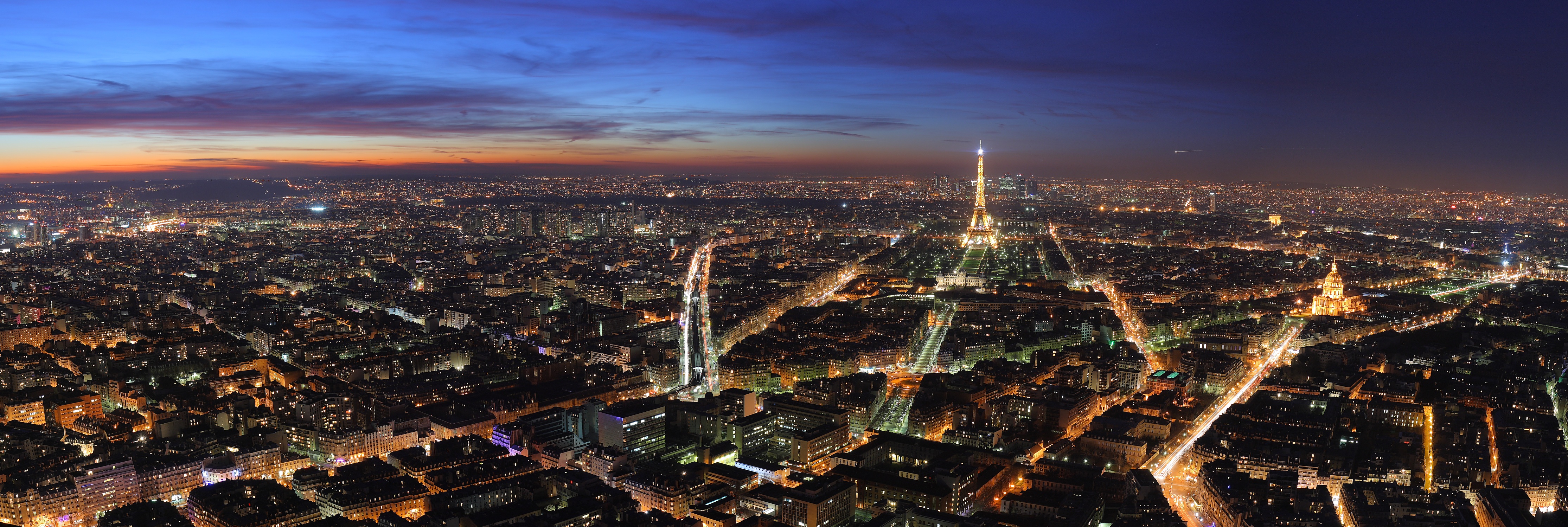
Wednesday, May 18, 2011
Again in touch.
Last week was a kind of cultural pump, and not regarding only to German culture, but to an incredible mix of everything. Have you thought about the title of the post? Yes, I had visitors (and yes, from my country... far, isn't it?). I received two friends from my small (and almost impossible to find) town, and as well I have spent the weekend with another guest, my cousin, who is living in Brussels. We have drunk enough beer and eaten enough German sausages, of course. Amazing moments, for sure.
I don't know why I always felt, throughout my whole stay here, the need to show everybody how beautiful and incredible is this place, and how good is my general life. I guess it is because I think in my natural parents, and all the doubts they must have about my new way of life. And I found pretty good the fact of showing all this to someone who would fly again to my country and could talk about it with my parents, face to face. I really took a load off.
 Contrary to what AFS preaches, I found the visit enriching in every aspect, and not only for me, but also for my German family, who enjoyed their company as much as me. I discovered how amazing we can be, that when we really want, we can spend unforgettable moments, regardless if we share or not the culture, the skin color or even the language. The visit also woke me confidence in myself, because I realized that I was able to make a truly good thing with my German, due to the role of real-time translator I took.
Another clever remark I want to make is about how German I became (this still surprises me), as much that I programmed each little detail of every single day they would spend with me. And I don't want to boast about it, but I am proud because I knew how to take time together without being absent in the school. You can’t imagine how proud I feel of being such responsible (and I am sure that my friends have noticed that too).
I haven't won the lottery, but things are going really well. The trash that was somewhat stinking up my life has been swept away and although I sometimes want to kick out everything and just lie on my bed for a long long time, the bad moments are no longer so bad. I have not planned so many things (I don't want to be disappointed then), but anyway I know that this year will be even better than I have thought, no doubt.
I don't know why I always felt, throughout my whole stay here, the need to show everybody how beautiful and incredible is this place, and how good is my general life. I guess it is because I think in my natural parents, and all the doubts they must have about my new way of life. And I found pretty good the fact of showing all this to someone who would fly again to my country and could talk about it with my parents, face to face. I really took a load off.
Contrary to what AFS preaches, I found the visit enriching in every aspect, and not only for me, but also for my German family, who enjoyed their company as much as me. I discovered how amazing we can be, that when we really want, we can spend unforgettable moments, regardless if we share or not the culture, the skin color or even the language. The visit also woke me confidence in myself, because I realized that I was able to make a truly good thing with my German, due to the role of real-time translator I took.Another clever remark I want to make is about how German I became (this still surprises me), as much that I programmed each little detail of every single day they would spend with me. And I don't want to boast about it, but I am proud because I knew how to take time together without being absent in the school. You can’t imagine how proud I feel of being such responsible (and I am sure that my friends have noticed that too).
I haven't won the lottery, but things are going really well. The trash that was somewhat stinking up my life has been swept away and although I sometimes want to kick out everything and just lie on my bed for a long long time, the bad moments are no longer so bad. I have not planned so many things (I don't want to be disappointed then), but anyway I know that this year will be even better than I have thought, no doubt.
Tuesday, May 17, 2011
Hope for tomorrow
Today was kind of a crappy day, for all sort of reasons that weren't in my power to change, you know, the type of unfortunate events that go beyond your control. I had, during almost all the day, a particular kind of bitter feeling inside. So, if you are looking for a post plenty of positivism, today is not the right day. And yes, I know I should probably be welcoming and friendly, and try to lighten up your life, and not succumb to my inner grump. But I am afraid this post will be gray, if any.
Three different bus drivers left me three times today! I think I ran more today than in my whole life trying to catch the fucking buses, screaming like a madman and cursing inside. Besides, I ran all the time with my backpack on my shoulders, which weighs more than two adorable kilos. I wanted to mourn. The reason for my anger is that the bus drivers are always late, but I mean ALWAYS. And I don't understand yet why I had such bad luck today, because the three fucking buses I had to take were so early, that when I arrived to the stop, they were just leaving. Shit.
 And shit is not over. I had 4 free hours at the school today, but I still had to get up at 6:15 due to an only fucking hour in the first module. I can't believe how responsible I am. If it were my choice, I would haven't even thought about it, I would have been just absent. I personally think that one hour isn't really important enough to make shitty a whole morning, but I don't have to forget I am in Germany now, and things are different. And yes, I know: this particular sense of responsibility from here sucks.
I really don't want to come across as a stubborn, specially with my bitter complaints against this society. I must admit that it has opened the doors to me and there was no problem at all, in fact I always felt absolutely welcomed and supported. It is just that sometimes the good mood is too costly to wear every day when there are so many weird things around. The bad weather of the last three days has also to do, I think. I must be thankful because here I have a family. In sooth, today on the way back home I thought about locking myself in my room until tomorrow, but then when I met my hostparents and told them of my disgusting experience, everything became better. The smile returned, or at least a hint of it, and I found myself also laughing at my misfortunes. And man, that was a really sudden change of tone.
Right now I am leaned back in my chair, sipping Cappuccino from a cup, closed to all ways of feeling bad again, and thinking in all the stuff that makes life a bit better, brighter and lighter. So, to keep it reasonably short and interesting, these days are inevitably a part of this life, and although some days of my life are black and white, I try always to see them in all the splendid colors of the rainbow. This makes me feel better, as did the special words from grandma or good friends that I am truly missing.
In conclusion, I have something good to say: tomorrow will be better, of course. It could not be worse than today. At least I learned that the bus drivers who are already hateful will never be polite, even if you are fifteen minutes earlier standing at the stop, or if you smile nicely at them every time you show your ticket. And the funniest and most ironic thing of all is that this shit will happen again, a thousand times, and I wont be able to avoid it. So, problem without solution is not a problem. Just learn to make it part of my life. After all, today I did sports, and definitely a lot.
Three different bus drivers left me three times today! I think I ran more today than in my whole life trying to catch the fucking buses, screaming like a madman and cursing inside. Besides, I ran all the time with my backpack on my shoulders, which weighs more than two adorable kilos. I wanted to mourn. The reason for my anger is that the bus drivers are always late, but I mean ALWAYS. And I don't understand yet why I had such bad luck today, because the three fucking buses I had to take were so early, that when I arrived to the stop, they were just leaving. Shit.
And shit is not over. I had 4 free hours at the school today, but I still had to get up at 6:15 due to an only fucking hour in the first module. I can't believe how responsible I am. If it were my choice, I would haven't even thought about it, I would have been just absent. I personally think that one hour isn't really important enough to make shitty a whole morning, but I don't have to forget I am in Germany now, and things are different. And yes, I know: this particular sense of responsibility from here sucks. I really don't want to come across as a stubborn, specially with my bitter complaints against this society. I must admit that it has opened the doors to me and there was no problem at all, in fact I always felt absolutely welcomed and supported. It is just that sometimes the good mood is too costly to wear every day when there are so many weird things around. The bad weather of the last three days has also to do, I think. I must be thankful because here I have a family. In sooth, today on the way back home I thought about locking myself in my room until tomorrow, but then when I met my hostparents and told them of my disgusting experience, everything became better. The smile returned, or at least a hint of it, and I found myself also laughing at my misfortunes. And man, that was a really sudden change of tone.
Right now I am leaned back in my chair, sipping Cappuccino from a cup, closed to all ways of feeling bad again, and thinking in all the stuff that makes life a bit better, brighter and lighter. So, to keep it reasonably short and interesting, these days are inevitably a part of this life, and although some days of my life are black and white, I try always to see them in all the splendid colors of the rainbow. This makes me feel better, as did the special words from grandma or good friends that I am truly missing.
In conclusion, I have something good to say: tomorrow will be better, of course. It could not be worse than today. At least I learned that the bus drivers who are already hateful will never be polite, even if you are fifteen minutes earlier standing at the stop, or if you smile nicely at them every time you show your ticket. And the funniest and most ironic thing of all is that this shit will happen again, a thousand times, and I wont be able to avoid it. So, problem without solution is not a problem. Just learn to make it part of my life. After all, today I did sports, and definitely a lot.
Subscribe to:
Posts (Atom)